
How Arrest Warrants Work in Rabun County
Nobody lands on a Rabun County arrest warrant because a sheriff put a name on a list. The process starts with evidence given under oath. Under O.C.G.A. §17-4-40, a Georgia judicial officer who finds the statutory probable-cause requirements satisfied may issue process. Rabun Magistrate Court issues arrest warrants locally. Felony cases move to the Superior Court of Georgia in the Mountain Judicial Circuit. The record itself, not guesswork, tells you which court issued the warrant. An officer or another lawful applicant brings a sworn complaint. The judicial officer then weighs the stated facts. If probable cause supports the alleged offense, the officer signs a warrant commanding an authorized officer to arrest the named or described person and bring that person before the proper judicial officer. That signed order is what turns an application into executable process in Rabun County.
Rabun County Arrest Warrant Probable Cause
Three Georgia statutes trace the whole path. Section 17-4-40 sets out who may issue an arrest warrant and the probable-cause standard. O.C.G.A. §17-4-45 provides the sworn affidavit or complaint structure, and O.C.G.A. §17-4-46 gives the warrant form and its command to arrest. Together they govern how a Rabun County arrest warrant becomes executable process.
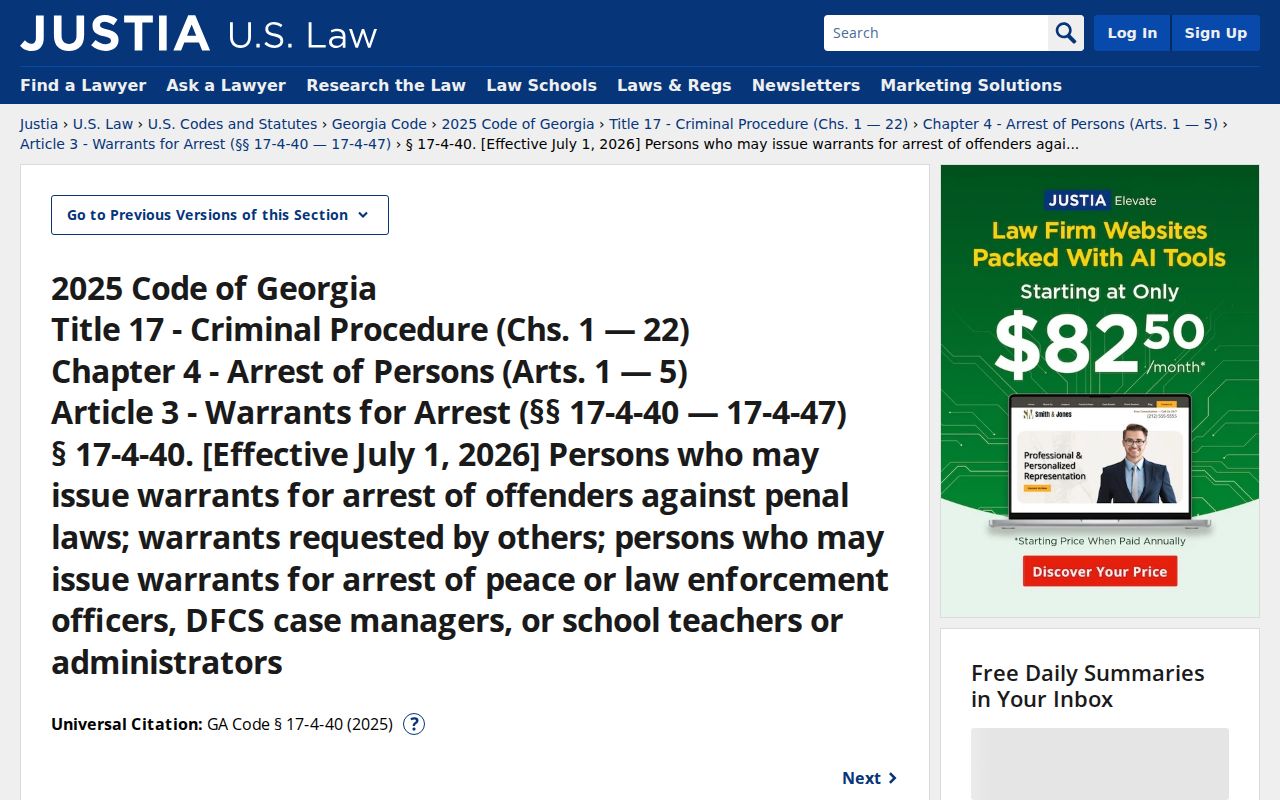
This sequence explains why a police report, an arrest, a charge, and a warrant are separate records in Rabun County. The affidavit supports the review. The warrant is the court's order. The return, where maintained, records execution afterward.
Arrest Warrants: What They Contain
Read a Rabun County warrant by its fields, not by assumption. Confirm the issuing county first. Then check the judicial officer, the warrant or case identifier, the subject's identity, the alleged offense, and the issue date. Bond appears only if the proper court or jail record sets it, so never infer an amount from another case.
| Warrant Number | The unique process reference, shown as warrant number and preserved exactly as issued. |
|---|---|
| Named Subject | The name or identifying description in the judicial order, checked with more than a name alone. |
| Charge / Offense | The offense alleged in the application and warrant, not a finding of guilt. |
| Issuing Judge / Court | The judicial officer and court with authority over the process. |
| Probable-Cause Record | The sworn complaint or affidavit basis, subject to court access and investigative limits. |
| Date / Return | The issue date and any later execution or return information maintained by the agency. |
| Bond / Release | Terms entered by the authorized court or jail, if any, rather than a predicted amount. |
Rabun County Courts Issue, Sheriff Serves
The court and the sheriff have separate jobs in Rabun County. A judge or magistrate issues the arrest warrant after judicial review. The Rabun County Sheriff's Office then executes and returns the process, provides court security, makes arrests, and keeps the records tied to those duties. The sheriff cannot erase or recall the court's order. It can only confirm operational details. The official sheriff duties page lays out that court-process role under O.C.G.A. §15-16-10.
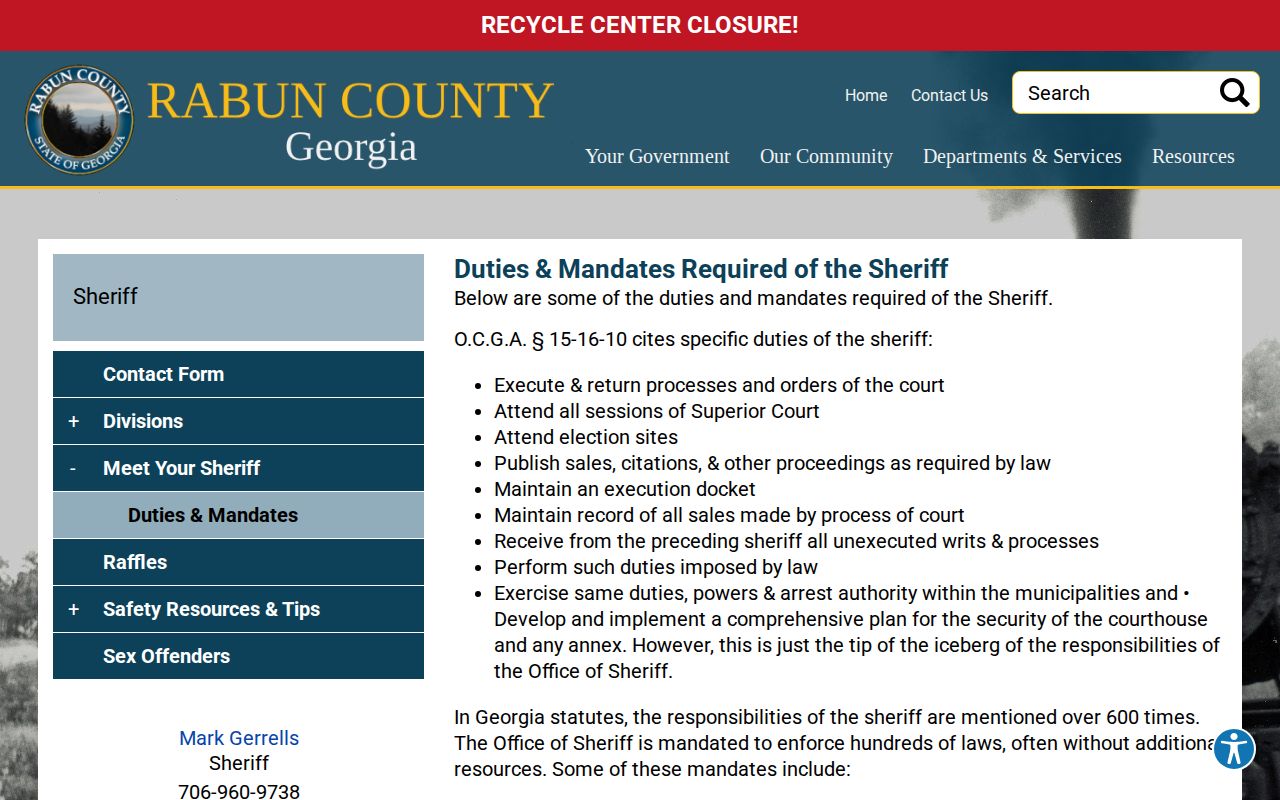
The county's own page ties the service role to official duty. To change a warrant's status, contact the issuing Rabun County court or your lawyer. Ask what order, appearance, or motion is required.
How Warrants Get Served in Rabun County
A Rabun County arrest warrant can be served by the sheriff or by another officer with lawful authority. Service might happen when officers find the person, during an unrelated lawful encounter, or when the person reports as directed. The sheriff publishes no service schedule and no warrant-unit roster. So do not count on a set time or place. Booking records the custody event after arrest. From there, the person may see a first appearance, a bond decision, a transfer, or another court-directed step. Which one applies depends on the warrant and on any other holds. Anyone arranging a voluntary surrender in Rabun County should first verify the issuing court, confirm the warrant is still active, and pin down the booking location and bond instructions. A lawyer can often coordinate the whole process.
Rabun County Arrest Warrants and Jail Holds
Rabun County Detention Center information describes a 102-bed facility at 175 Boen Creek Road in Tiger and routes questions to the right court or agency. Its caution about holds matters. Another jurisdiction can hold a separate warrant. The exact release date is not public. A Rabun County booking result, then, cannot confirm that every Georgia or out-of-state matter is clear.

The detention center answers custody questions and follows its published jail procedures. Only the issuing court controls its own order. Ask separately about the Rabun County warrant, bond status, any other agency's hold, the next court date, and the document that confirms release from each process.
Hold check: clearing or bonding one Rabun County arrest warrant does not clear another court's warrant or guarantee a release date.
Arrest Warrants, Summonses, and Bench Warrants
These papers differ in both basis and response. An arrest warrant authorizes custody after sworn probable-cause review. A summons orders an appearance without directing arrest. A bench warrant usually follows a court event such as failure to appear or specified accusation circumstances. In Rabun County, the document and the docket, not a casual label, tell you which process applies.
| Feature | Arrest Warrant | Summons | Bench Warrant |
|---|---|---|---|
| What it directs | An authorized officer makes an arrest | The recipient appears as ordered | An officer may take the person before court |
| Typical basis | Sworn probable cause of an alleged offense | Notice of a charge or required proceeding | Failure to appear or another statutory court trigger |
| Issuer | An authorized judicial officer | A court or authorized official under the applicable process | The responsible court |
| Response | Verify, consult counsel, and arrange lawful surrender or court action | Appear by the stated date and terms | Ask the issuing court about recall, appearance, and bond |
Checking Rabun County Arrest Warrant Records
Rabun County publishes no online warrant roster, so a warrant search starts with the issuing court when you know it. The Clerk of Superior Court handles access for Superior, Magistrate, Juvenile, and Traffic matters. City cases sit with each municipal court. For sheriff-held material, the RCSO Reports and Records page lays out phone, email, mail, in-person, and online request methods. Captain Cody Sanders serves as the records custodian. Expect a workflow of clarification, a fee estimate, redaction, payment, and release. This formal records path is not a real-time personal status check. Ask whether telephone confirmation is allowed and which identifiers you must give. Georgia's statewide guidance adds a caution worth heeding: an in-person inquiry can end in immediate custody if an active warrant exists.
Restricted Rabun County Arrest Warrant Material
The Georgia Open Records Act frames access, but it does not hand over every affidavit or investigative detail on demand. O.C.G.A. §50-18-72 allows protection or redaction for pending investigations, confidential sources, safety concerns, and other exempt material. Sealed records and juvenile process carry separate limits too. A narrow request beats a blanket one in Rabun County. Give the issuing court, the process or case number, an approximate date, and the record type when you can. Skip requests for private home addresses, personal phone numbers, medical data, victim details, or juvenile identifiers. If access is denied or redacted, ask the custodian to name the legal basis. Then ask which nonexempt portions can still be produced.
Handling an Arrest Warrant in Your Name
Confirm the warrant through the court or sheriff before acting on an old page, a repost, or a name-only match. Write down the office, date, warrant identifier, issuing court, and current status. Then talk with a lawyer about voluntary surrender, bond eligibility, and whether a motion to recall or quash is legally available. A motion asks the court; it does not remove a warrant automatically. The Rabun County detention FAQ lists the possible routes: property bond, transfer property bond, cash bond, or an approved bonding company or bondsman, plus a $20 county bonding fee. Those general options promise nothing for a specific person. Another hold can still block release. Call ahead, since the detention center posts no bond-window hours. Rely on the current court or detention instructions.
Important: consult a lawyer before surrendering; an active arrest warrant can lead to custody during any lawful contact with law enforcement.